Nero ·
A freshly discovered hoard — can you crack it?
A ceramic pot of Roman coins has just been dug up. This is the hoard case — Canoa // edu's flagship assignment — as an interactive demo: 16 real coins with photographs, a findspot on the map, and five stages of investigation. Try each stage — your answers are checked against real catalog data, right here, no account or LMS needed.
Play the hoard case See the full lesson plans Request a pilot for your school
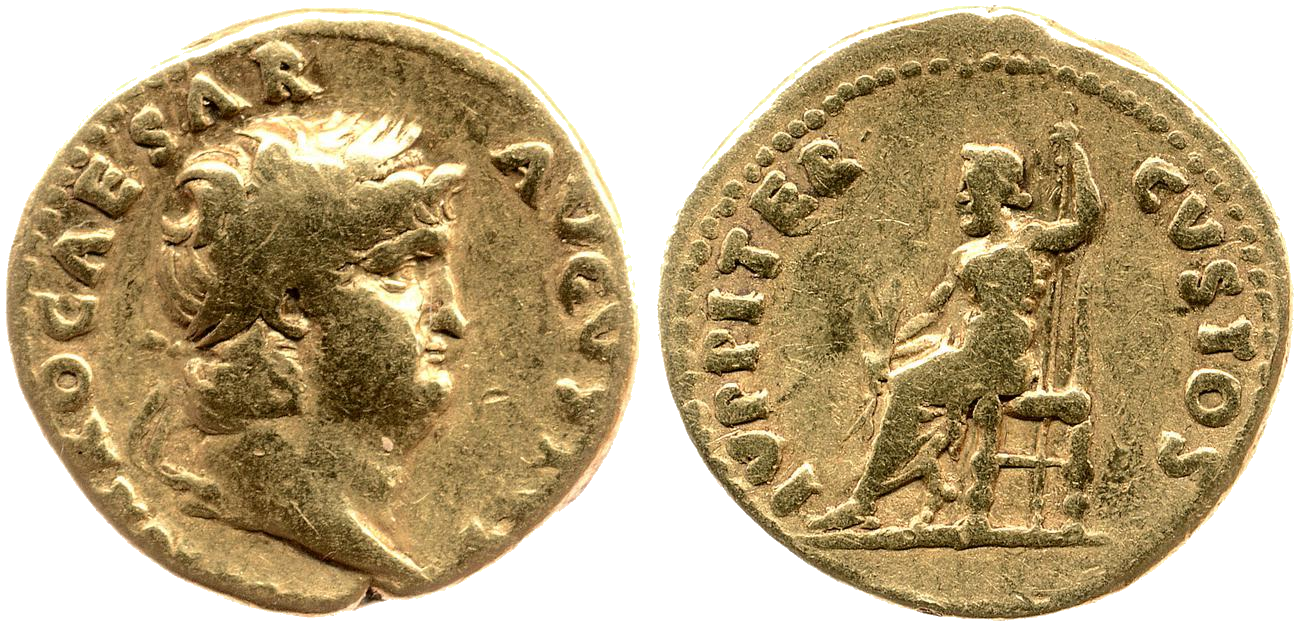
Изображение: © British Museum · лицензия
Your hoard at a glance
Date range: from AD 238 to AD 260. Dominant metal: Bronze (56%). Mint cities: Bizya, Deultum, Germe, Hadrianopolis thrace, Laodicea ad Mare, Massalia, Philippopolis, Rome.
Where was it found, and where were the coins made?
Findspot: Estimated findspot (centroid of the mints) (40,98, 23,46). Blue markers are the mints that struck the coins in this hoard. In the graded assignment the findspot is shown first and the student must work out the mints themselves.
Map showing the hoard findspot and the mints that produced the coins. Zoom buttons and keyboard arrow keys control the map.
Text list of mints: Bizya, Deultum, Germe, Hadrianopolis thrace, Laodicea ad Mare, Massalia, Philippopolis, Rome. Map data © OpenStreetMap contributors (ODbL).
Play the hoard case
Work the five stages like a real investigator. Submit each stage — you get an instant score and feedback, checked against the frozen answer key. There's no penalty for guessing, so try everything.
Stage 1 · Attribution weight 30%
Identify the issuing authority and denomination of each coin.
Stage 2 · Burial dating (TPQ) weight 15%
A hoard cannot have been buried before its youngest coin was struck. The terminus post quem is the maximum of the coins' earliest possible dates — the latest date from, not the latest date to. What is the earliest possible burial year? (Tolerance ±5 years.)
The TPQ coin is the anchor: RIC V Gallienus 371 (AD 260).
Stage 3 · Geography of origin weight 20%
Which of these mints produced the coins in this hoard? Check all that apply — scored by set overlap (partial credit for partial matches). The map above shows the candidates.
Stage 4 · Composition weight 15%
Tally from your stage-1 attributions. Two questions — percentage tolerance ±5 points.
Stage 5 · Conclusion weight 20%
Who might have buried this hoard, when, and why? Argue from stages 1–4: the dating (TPQ), the mints, the composition. In the real assignment this is graded by your teacher against a rubric — here's the rubric so you know what a good answer looks like.
Rubric (20 points)
- Use of Evidence (6 pts): Exemplary — Every claim is anchored to specific coins from the case, cited by catalog number. The TPQ coin is explicitly identified and its role explained. · Proficient — Most claims reference specific coins; the TPQ logic is present but the anchoring coin is not singled out. · Developing — General references to 'the coins' without catalog numbers; dating asserted rather than derived. · Beginning — Conclusion could have been written without looking at the hoard.
- Historical Reasoning (6 pts): Exemplary — Proposes a burial scenario (who, when, why) that is consistent with TPQ, mint geography, AND composition; acknowledges at least one alternative explanation. · Proficient — Scenario consistent with the evidence; no alternatives considered. · Developing — Scenario partially contradicts the evidence (e.g., ignores the latest coin or the findspot). · Beginning — No coherent scenario, or pure speculation detached from stages 1–4.
- Awareness of Limitations (4 pts): Exemplary — Explicitly distinguishes what the hoard proves (TPQ) from what it merely suggests (burial date, owner); notes at least one limit of the sample. · Proficient — Some hedging language, but proof and suggestion are blurred. · Beginning — Presents conjecture as certainty.
- Clarity & Structure (4 pts): Exemplary — Organized as a findings report: dating, origin, composition, interpretation. Terminology (TPQ, obverse, denomination) used correctly. · Proficient — Readable but loosely organized; occasional terminology errors. · Beginning — Terminology absent or misused.
Part of a full curriculum
The hoard case is the capstone of the Data & Patterns track: students move from reading one coin to analyzing hundreds, computing statistics, and writing evidence-based conclusions. See the full track.
For teachers: a full pilot of the hoard case assignment is free for the 2026–27 school year. Request a pilot.