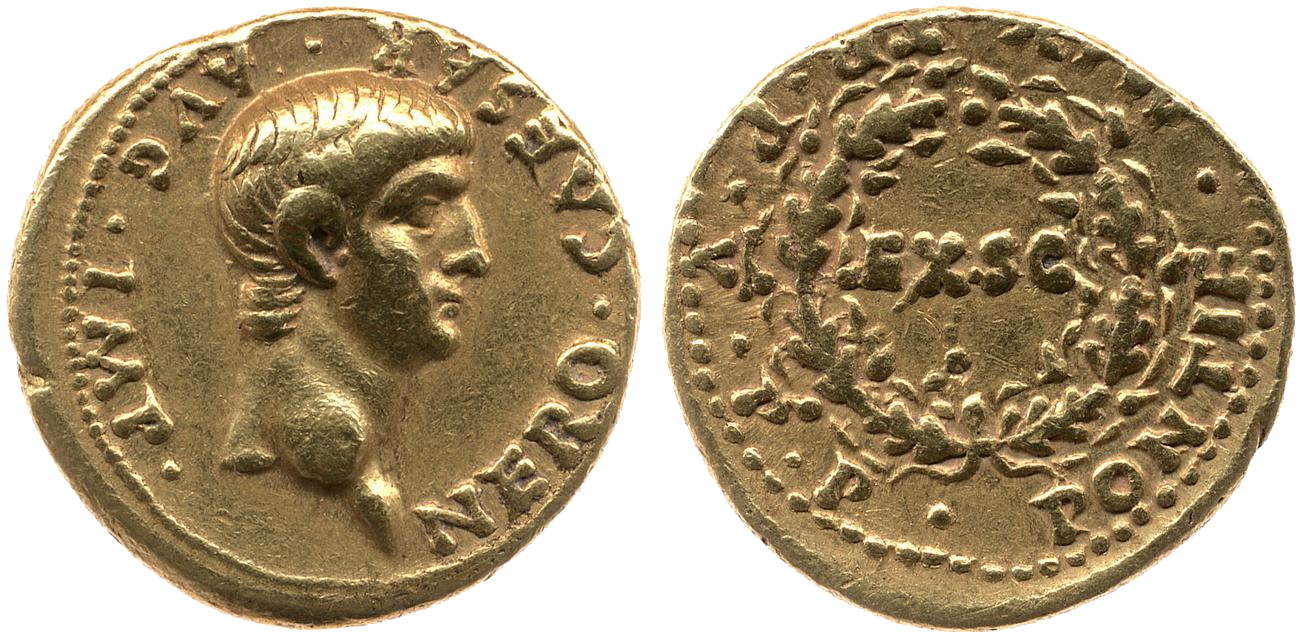
Nero ·
Teach with Real Ancient Coins — Right in Your LMS
Canoa // edu turns an open scholarly catalog of Greek, Roman, and Persian coinage into ready-to-grade assignments. Every student gets a unique coin. Every image stays properly licensed. Every grade lands in your gradebook automatically.
Try the Hoard Case demo For Districts & Admins
Works with Canvas · Schoology · Moodle (LTI 1.3)
128862 published coin types · 39642 with museum photographs · 540692 recorded specimens
Изображение: © British Museum · лицензия
What Canoa // edu solves
Primary sources without the paperwork
Museum-grade coin images and scholarly data, displayed with full attribution on our site — nothing to download, license, or clear with your district.
Assignments students can't copy
Our generator gives each student a different coin from your chosen filter — same skills, unique evidence. AI chatbots can't answer without doing the actual catalog work.
Grading that does itself
Legend decoding, attribution, and dating tasks are auto-checked against catalog data. Essays get side-by-side review with the source. Scores flow back to your LMS gradebook.
Hoard case: the detective assignment
A fresh coin hoard: students identify every coin, date the burial, trace the origins, and argue who buried it — five stages, four auto-graded. Try the demo.
For researchers: the same data powers the canoa-hoard-analysis agent skill — regional hoard studies (coin distribution by emperors/periods, charts, PDF article) via the public API. Install: npx skills add canoa-dev/canoa-skills
Made for Your Classroom
-
AP Latin & Latin III–IV
Decode authentic imperial titulature: IMP, AVG, TR P, COS — short real Latin texts, one coin at a time.
-
World History & Classical Civ
DBQ-style primary-source analysis: propaganda, economy, and empire on coinage.
-
Math & CS Electives
Real metrology data and a public JSON API for graphing, statistics, and student-built research agents.
-
Homeschool & Co-ops
Self-paced tracks from “read a coin” to independent research — no LMS required.
How it works
-
1. Pick a template
Legend decoding, blind attribution, metrology math, curation project, or essay — filtered by ruler, mint, metal, or date range.
-
2. Add to your course
One click through LTI — the assignment appears in Canvas or Schoology like any other activity.
-
3. Students explore, you review
Each student works with their own coin on canoanumis.org. Auto-graded parts score instantly; your rubric handles the rest.
Built for Student Privacy from Day One
- We don't know who your students are. Canoa // edu receives only an anonymous LTI identifier — no names, no emails, no photos.
- Grades live in your LMS, not on our servers. Student submissions are automatically deleted after the school year.
- Zero third-party trackers on any /edu/ page. No ads. No data sale. Ever.
- FERPA-aligned · COPPA-safe · GDPR-ready. NDPA (SDPC standard) agreement available for districts.
Coin type data is open under ODbL. Museum images are displayed only on canoanumis.org with full attribution, in line with each museum's open-access policy — your compliance answer is built in. All activities meet WCAG 2.2 AA; screen-reader users get scholarly obverse/reverse descriptions as image alternatives. Accessibility Conformance Report.
The hoard case: a full investigation
A pot of Roman coins, just dug up. Sixteen coins from eight different authorities and eight mints. Students work through five stages — attribution, burial dating, geography, composition, and a written conclusion — with the first four auto-checked against catalog data. No LMS needed for the demo.
Ready-Made Lesson Plans, Standards Included
Free, classroom-tested plans aligned to Common Core literacy standards, ACL/ACTFL, and the AP frameworks — each with a student handout, a rubric, and a printable PDF packet.
Available now: Reading Power: Decoding Roman Imperial Coin Legends (AP Latin), Coins as Evidence: A DBQ Without a Document (world history), and Weighing an Empire: Metrology and Debasement (statistics). Browse all plans.
Frequently asked questions
Is Canoa // edu free?
Pilots for the 2026–27 school year are free: one school, unlimited teachers, the full feature set. The public catalog and the lesson plans are free permanently. District licensing is quoted per site — see pricing.
Do students need accounts?
No. Students launch the activity from your LMS; we receive only an anonymous LTI identifier.
Can students cheat with AI?
Every student gets a different coin from your chosen filter — same skills, unique evidence. AI chatbots can't answer without doing the actual catalog work.
Does it work with Google Classroom?
Canoa // edu integrates through LTI 1.3, which is native to Canvas, Schoology, and Moodle. For Google Classroom we support shareable assignment links; full grade sync is on our roadmap.
What's a hoard case assignment?
A multi-stage investigation where students receive a fresh coin hoard: identify each coin's authority and denomination, date the burial using terminus post quem logic, trace the origins by mint, analyze the composition, and write a concluded findings report. Four of five stages are auto-graded. Try the demo — no LMS needed.
What about our district's vendor approval?
The whole packet is published: NDPA (SDPC), privacy policy, subprocessor list, and an Accessibility Conformance Report. Start at for districts or write to privacy@canoanumis.org.
Bring 2,000 Years of History to Your Next Class
Try the hoard case Request a Pilot
Questions? edu@canoanumis.org